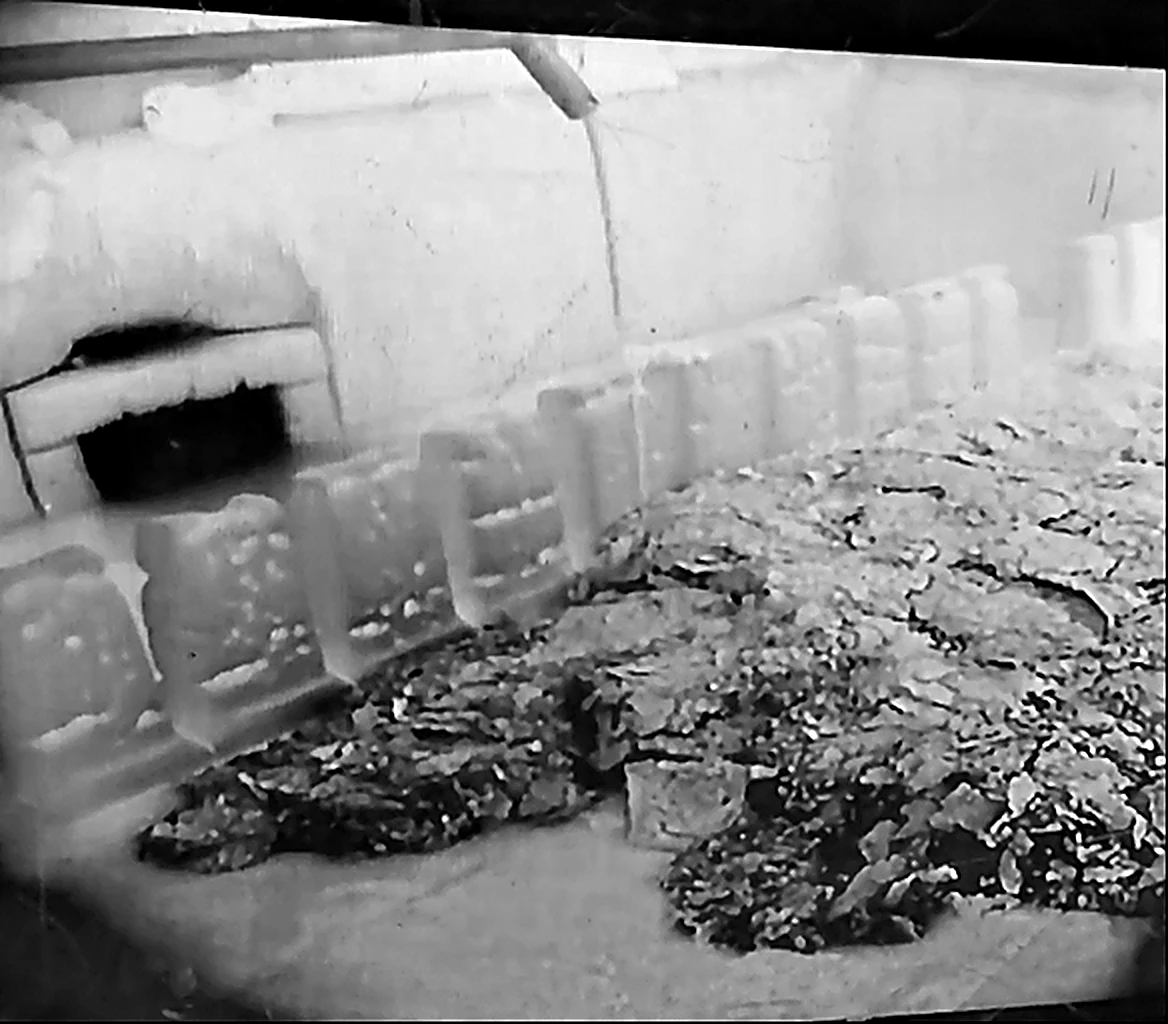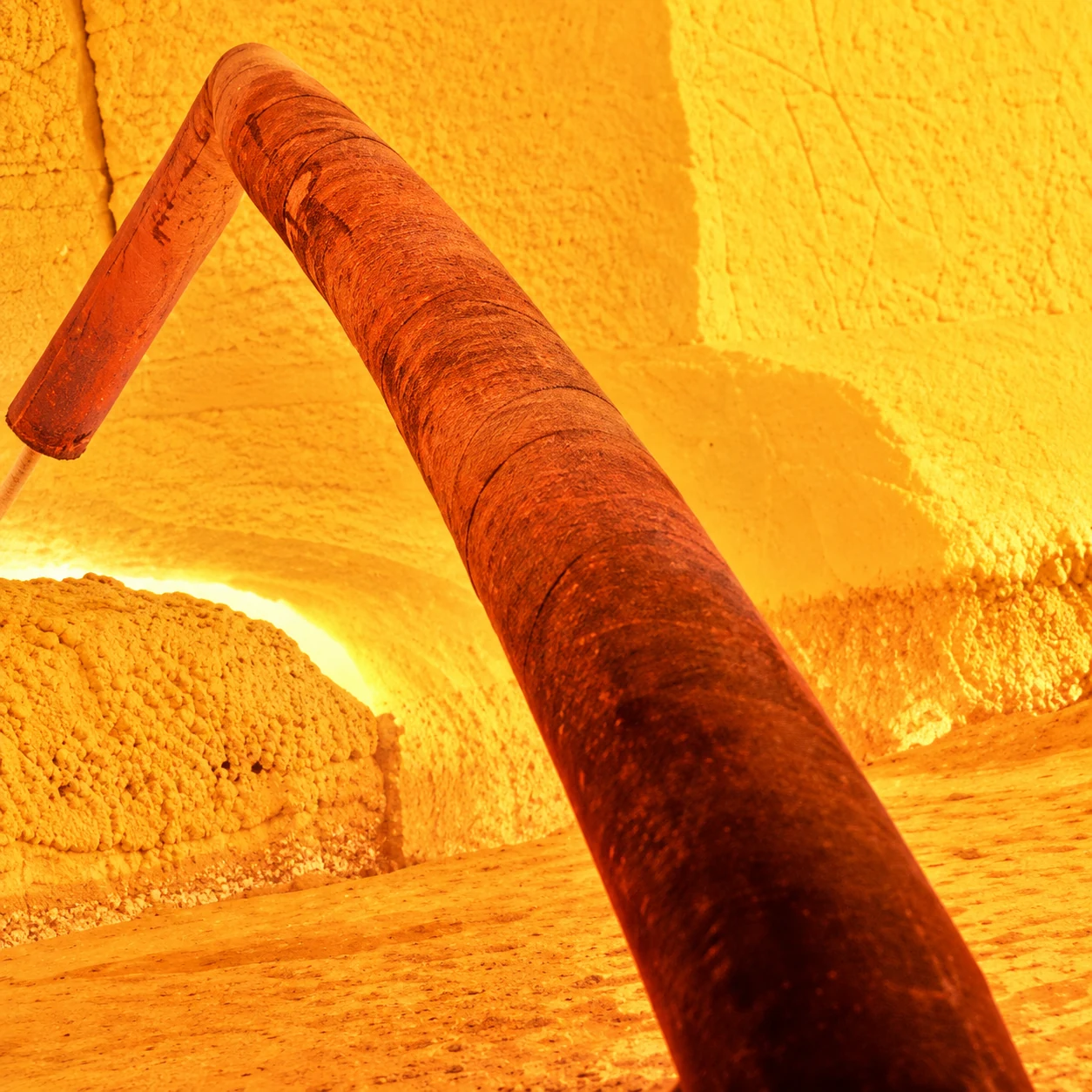
Planned or in an emergency, our hot repairs take place during the campaign to extend your furnace's life, without having to cool it down. They cover the superstructure as well as the glass-contact zone, and are usually carried out without stopping production.

Ceramic welding lets us work hot on the superstructure of glass furnaces. A specially designed refractory powder is sprayed with a flow of oxygen: the exothermic reaction turns it into a solid ceramic mass. Applied from the inside, it rebuilds and protects worn areas; from the outside, it seals joints and cracks.
Every furnace is different: after a site visit or a review of your drawings, our project managers work with your teams to design the right solution, down to the spray lances. We then carry out the work with our own machines, high-purity powders and qualified teams.
Unique know-how and materials, right inside your furnace.
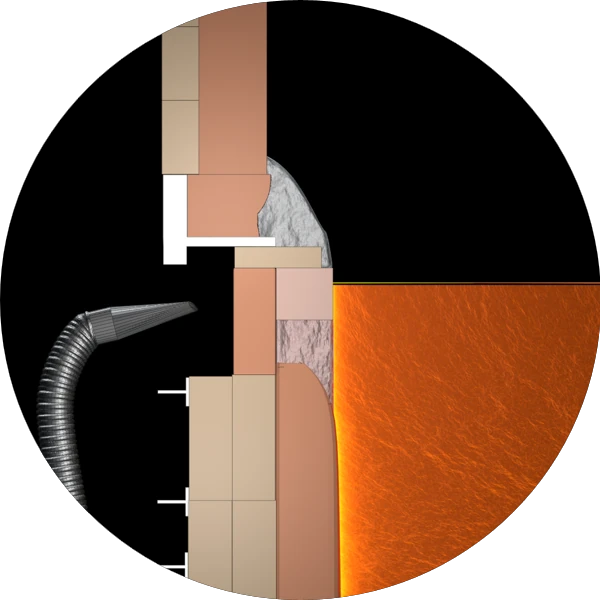
HTR is IRF's patented solution to renew the glass line hot, together with the critical area just above it, where tuckstones are often broken and the steel structure is exposed to heat.

A specific, long-lasting solution to repair the bottom of glass furnaces, after glass draining and temperature stabilisation at around 1300 °C, using AZS monolithics. IRF is the only company to offer two methods, depending on the furnace configuration:
Turnkey option: furnace draining, supply of AZS monolithics, installation and refilling.
Complementary methods to extend furnace life and keep its structural & thermal efficiency.
Rebuild worn areas from the inside, seal from the outside, without cooling the furnace.
Explore ceramic welding →Two methods depending on furnace configuration, including our lances introduced through the bottom, a patented process.
Holes plugged with hanging bricks or by replacing bricks. Depending on the condition of the crown: overcoating, shotcrete or ceramic welding.
Hot replacement or restoration of tank, superstructure, tuckstone and feeder blocks.
Cooled hooks hold the blocks in place and stabilise the furnace structure.
Complete furnace emptying prior to hot bottom repair.
Hot work on regenerators: wall repairs, thermal cleaning of the checkers, and more.
Removal and insertion of electrodes & holders.
New protective and insulating layers to reinforce the refractory and reduce heat losses: casting, shotcrete or bricklaying, as required.
Planned work or emergency, our qualified teams respond quickly anywhere in the world, with turnkey hot-repair solutions.